
Are There Home Loans for Self Employed Individuals in Australia?
Are you a small business owner wondering about home loans for self employed people in Australia? If so, you’re certainly not alone. According to data from the Australian Small Business and Family Enterprise Ombudsman, 1.6 million Australians are now self employed, accounting for 60% of small businesses nationally.
While being self employed comes with a great range of perks (being your own boss, working according to your own schedule, etc.), it also comes with a potential issue: it can be more difficult to secure home loans for self employed people in Australia.
If this is the situation you currently find yourself in, there’s no need to panic. The path to homeownership for self employed individuals can be successfully navigated with the right advice and help.
Why is it challenging to get a mortgage for a self employed person? What information do you need to supply to get an application approved for self employed home loans? And how can you find the best home loans for self employed individuals?
Why Obtaining a Mortgage for Self Employed Individuals Can Be Challenging
You may be asking: Why is it so difficult to get a mortgage for self employed home buyers?
It’s an unfortunate fact that 90% of all new businesses will fold or cease trading within 5 years. Because of this, home loans for self employed borrowers are generally a straight assessment of risk. If you want a lender to give you hundreds of thousands of dollars to buy a home, then you first need to prove that you can pay that money back over the long term. This means you need to demonstrate the stability and ongoing viability of your small business.
A Home Loan for a Self Employed Person: Understanding the Lending Criteria
A few reputable lenders have introduced a new policy that can significantly benefit self-employed individuals operating a company. Under this new criteria, self-employed individuals can have their income assessed similar to a PAYG employee. If receiving a regular salary through their company, self-employed owners can supply verified payslips and proof of an Income Statement within the ATO portal that it has been in place for a minimum of 6 months. Self-employed individuals that meet the right criteria will qualify for this process even if they have been self-employed for less than the usual two-year minimum period. This streamlined process can be a game-changer for company owners looking to enter the property market faster.
For self-employed individuals who cannot show proof of payslips through their company for a minimum of 6 months, they will fall into one of two categories: those operating more than 2 years, and those that have been operating less than 2 years.
- Operating for More Than 2 Years
If you’re self employed, but can prove that you’ve been in business for at least 2 years, then your application will be classified as lower-risk. Essentially, if you have the necessary paperwork for two full financial years (and you operate in profit), then you can usually qualify for a home loan, just like someone who receives a salary from an employer.
- Operating for Less Than 2 Years
If you’ve been operating your business for less than 2 years and you want to apply for a self employed home loan, then you will face stricter lending criteria. For example, you may need a larger deposit, and you’ll likely be charged higher interest rates to offset the perceived risk (normally 1–5% per annum more expensive than mainstream interest rates).
To find out more about lending criteria for self-employed home loans, talk to an experienced mortgage broker who can guide you on what would apply to your situation.
What Documents are Required for Self Employed Home Loans?

When applying for a self employed mortgage, you’ll typically need to provide a combination of the following documents:
- Business Activity Statements (BAS).
- Proof of GST registration.
- Bank statements for business and personal accounts.
- Proof that you have been self employed in the same industry for at least 1-2 years (depending on the lender).
- Proof of ABN registration.
- Business financial statements (balance sheets, profit and loss statements, etc.).
- Australian Taxation Office (ATO) income tax returns and Notice of Assessments.
- Evidence of deposit or available equity.
If you’re not in a position to provide all of the necessary documentation, you may find a low doc home loan for self employed individuals to be more suitable.
What Size Deposit Will You Need for Self Employed Home Loans?
When it comes to mortgages for self employed individuals, the size of the deposit you’ll need will very much depend on your choice of lender. At the very minimum, you’ll need to have saved a deposit that is equal to 5% of the total property value. However, if your deposit is less than 20% of the purchase price, you will also be charged a fee for Lenders Mortgage Insurance. Ultimately, the bigger the deposit, the more positively the lender will view your application. The better your application looks, the more likely you’ll be to secure great terms and a competitive interest rate.
Mortgages for Self Employed People: Further Tips and Advice
If you’re still feeling concerned about your eligibility for a self employed home loan, then there are several practical steps you can take. Implementing these suggestions will help to minimise any potential roadblocks that you might otherwise encounter as a self employed borrower.
1. Keep Detailed and Up-to-Date Financial Records
It’s imperative that you keep accurate records of both your business and personal finances. Having well-organised and up-to-date financial records will streamline the application process and prove your financial stability.
2. Demonstrate Consistent Income
You’ll need to show the lender that you have a consistent and reliable income stream. Steady income reassures lenders that you’ll be able to meet your monthly mortgage repayments.
3. Minimize Debt and Manage Credit Responsibly
Managing your debt and credit effectively is key to improving your chances of securing a home loan. Start by reducing any outstanding debts, such as credit card balances or personal loans, as this can improve your debt-to-income ratio. This is a key factor lenders consider when assessing loan eligibility.
4. Build a Strong Deposit
Having a higher deposit (ideally 20% or more) can significantly improve your chances of loan approval. A larger deposit may also lead to more favourable interest rates and loan terms.
5. Seek Professional Advice
Consult with professionals, including accountants and mortgage brokers, early in the process. An experienced broker, particularly one with expertise in self employed home loans, can help you choose lenders that are more likely to understand and accommodate your unique financial situation. Consulting with your accountant prior to the end of the financial year can ensure your financial records are in order and optimised for a successful mortgage application.
7 Interesting Facts About Home Loans for Self Employed
1. Compare Home Loans for Self-Employed Borrowers
At this stage of your research, the key decision is not whether home loans for self employed borrowers exist, but which loan structure will give you the strongest approval outcome based on your financial position.
Most self-employed borrowers will fall into one of two lending pathways:
Full documentation loans
If your tax returns are finalised and reflect stable income, this option typically provides access to a wider range of lenders, sharper interest rates and more flexible loan features. For established business owners, this is often the most cost-effective solution.
Low-doc or alternative documentation loans
If your taxable income does not fully reflect your cash flow or your most recent financials are not yet available, a home loan for self employed applicants may still be achievable using BAS statements, business bank statements or accountant verification. These loans prioritise real-world business performance over tax outcomes.
The right option depends on timing, business structure and lender policy. Choosing the most suitable structure early can prevent unnecessary declines and delays.
2. How Much Can You Borrow When You Are Self-Employed?
When assessing mortgages for self employed borrowers, borrowing capacity is often more flexible than many business owners expect — provided the application is structured correctly.
Rather than relying on a single income figure, lenders look at how consistently your business generates income and how that income supports long-term repayments. Factors such as deposit size, existing liabilities and business stability can have as much influence as reported profit.
This means two borrowers with similar incomes may receive very different outcomes depending on how their application is presented. For anyone considering a mortgage for self employed income, a tailored assessment is essential to understand realistic borrowing limits and avoid underestimating your position.
Using a borrowing power calculator can provide a starting estimate, but a tailored assessment is essential for anyone seeking a mortgage for self employed borrowers with complex income structures.
3. Interest Rates and Costs for Self-Employed Home Loans
Interest rates on home loans for self employed borrowers can be competitive, particularly when full documentation is available. In many cases, rates are comparable to standard residential loans.
However, costs can vary depending on the loan type and lender. Consider the following:
- Full doc loans often attract sharper interest rates
- Low-doc loans may have slightly higher rates due to perceived risk
- Application fees, valuation fees and lender policy fees may apply
- Lenders mortgage insurance may be required at higher loan-to-value ratios
Understanding the true cost of a self employed home loan involves more than comparing headline rates. Loan features such as offset accounts, redraw facilities and repayment flexibility are just as important for business owners managing variable income.
4. Self-Employed Home Loan Case Scenarios
Real-world scenarios help demonstrate how home loans for self employed borrowers can be structured successfully.
Scenario 1: Sole trader with fluctuating income
A contractor with two years of tax returns and strong BAS statements was able to use add-backs to improve serviceability and secure a competitive loan.
Scenario 2: Company director paying themselves a salary
By structuring income through PAYG wages, the client was assessed similarly to an employee, simplifying approval for their home loan for self employed needs.
Scenario 3: Business owner with strong cash flow but low taxable income
Using alternative documentation and an accountant’s letter, the lender assessed true business performance rather than taxable profit alone.
These examples show that the right strategy can make mortgages for self employed borrowers far more achievable than many expect.
5. Self-Employed vs PAYG Home Loans: What This Means for You
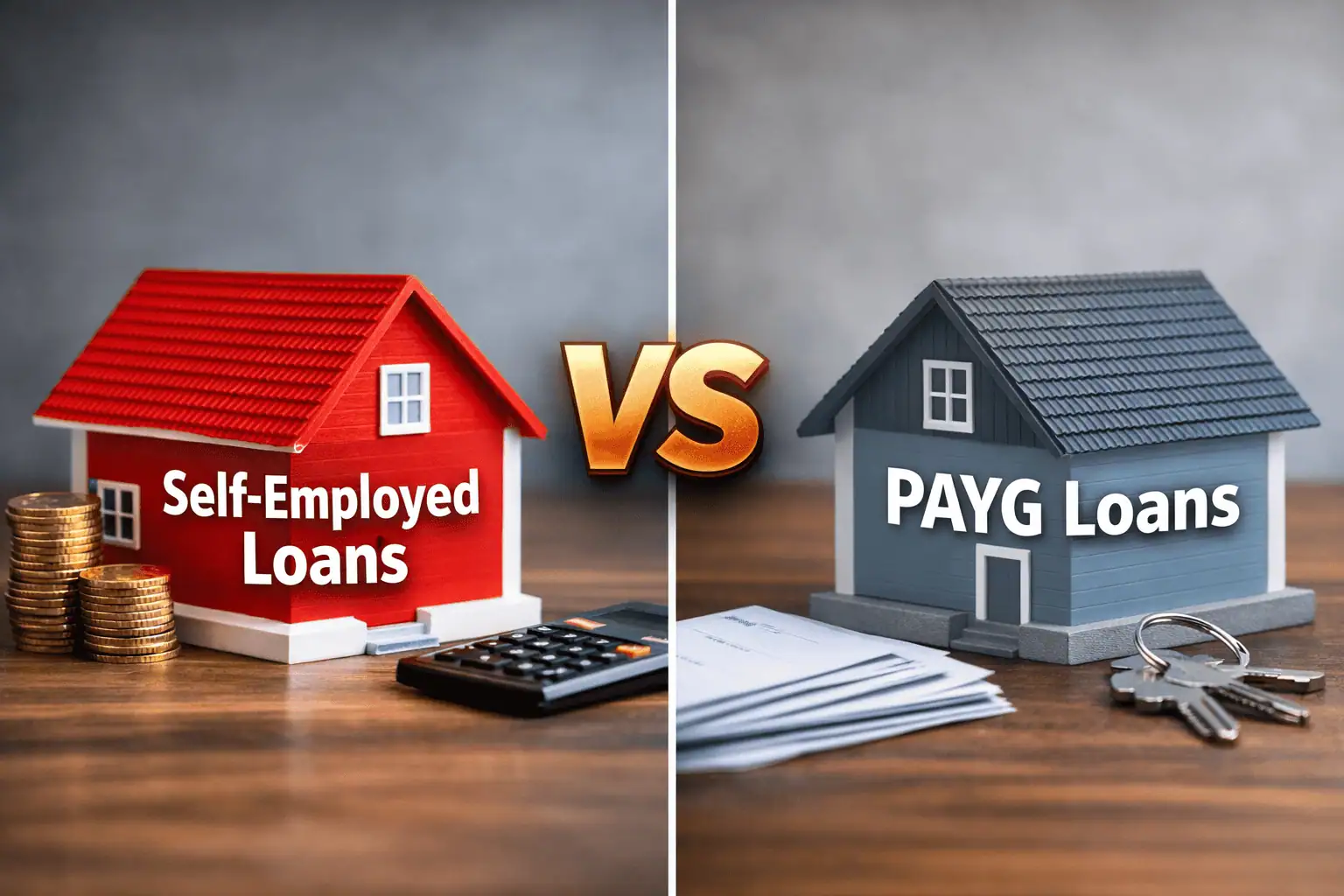
While self employed home loans and PAYG loans may appear similar on the surface, the way lenders assess them can affect more than just approval.
For self-employed borrowers, assessment differences can influence:
- How much you can borrow
- Which lenders are available to you
- How quickly an application can be approved
These differences do not mean self-employed borrowers are disadvantaged, but they do mean lender selection and loan structuring matter more. Understanding this distinction helps ensure your application is aligned with lenders that are comfortable assessing business income, rather than applying standard employee criteria to a self-employed situation.
6. Final Questions Before Applying for a Self-Employed Home Loan
Before moving forward with home loans for the self-employed, many borrowers reach a final decision stage where clarity is more important than general information.
Common considerations at this point include:
- Whether it is better to apply now or wait until updated financials are available
- How business structure may influence lender choice
- Whether refinancing or purchasing will be assessed differently
- How long approval is likely to take once documents are submitted
Addressing these questions early helps ensure you apply with confidence and reduces the risk of avoidable setbacks during the approval process.
7. Pre-Application Checklist for Self-Employed Borrowers
If you are preparing to apply for a home loan for self employed income, having the right documents ready can significantly improve turnaround times and lender confidence.
While requirements vary, commonly requested items include:
- ABN and GST registration details
- Personal and business tax returns
- Notices of assessment
- BAS statements or business bank statements
- Evidence of deposit or equity
- Current loan statements
- Accountant confirmation where required
This checklist is designed to support borrowers who are ready to proceed, rather than explain documentation at a high level. Having these items organised before applying can streamline the process and strengthen your overall application.
Ready to Apply for a Self-Employed Home Loan?
If you are actively comparing home loans for self employed borrowers and want clarity before applying, speaking with an experienced mortgage broker can make the process far more straightforward.
Whether you are exploring your options or ready to move forward with a home loan for self employed income, tailored advice can help you identify suitable lenders, structure your application correctly and avoid unnecessary setbacks.
Book a consultation today to discuss your situation and take the next step toward securing the right mortgages for self employed borrowers with confidence.

Patrick Cranshaw, a Certified Mortgage Professional for over 21 years, founded North Brisbane Home Loans in 2002. His career began with ANZ Bank in New Zealand, where he progressed over 16 years to a Business Banking role in Virginia. After moving to Brisbane in 2000, Patrick led the QLD market for a home loan agency, helped set up the REMAX Real Estate Finance division, and practiced as a broker.